NFPA 96 in Kingston: The Standard Behind Kitchen Exhaust Cleaning
The Standard for Ventilation Control and Fire Protection of Commercial Cooking Operations is the fire safety standard the National Fire Protection Association publishes as NFPA 96. It covers the exhaust path from the hood and filters through the duct to the rooftop fan. It sets 0.078 inches as the acceptable grease depth and publishes inspection intervals by type and volume of cooking. The Ontario Fire Code (O. Reg. 213/07) references NFPA 96 for commercial cooking exhaust, which is how the standard reaches a Kingston kitchen. Kingston Hood Cleaning references the published standard and is not affiliated with NFPA.
Last updated September 2026
What the NFPA 96 standard covers
NFPA 96 treats a commercial kitchen exhaust as one fire path, from the cooking surface to the point where the air leaves the building.
The standard deals with how the system is built, how it is protected and how it is maintained. For an operator, the maintenance part matters most. It says the system must be inspected on a schedule and cleaned when grease builds past a set depth.
That depth is 0.078 inches. It applies anywhere on the path, so a clean canopy does not excuse a loaded plenum or duct.
The schedule depends on what you cook and how much of it. A wood-fired oven and a church hall kitchen do not load a system at the same rate, and the standard does not pretend they do. You can read the standard itself at nfpa.org.
NFPA 96 inspection frequency: cooking volume vs interval
NFPA 96 publishes four inspection intervals, set by the fuel and the volume of cooking under the hood.
| Cooking volume vs inspection interval | What NFPA 96 puts in this group | A Kingston-area kitchen that fits |
|---|---|---|
| Solid fuel: monthly | Cooking over wood, charcoal or other solid fuel | A wood-fired pizza oven or a smoker feeding into the exhaust |
| High volume: quarterly | Charbroiling, wok cooking and 24-hour operations | A kebab or Korean grill on Princess Street, or a quick-service line that never closes |
| Moderate volume: semi-annual | Steady daily cooking without the high-volume appliances | A pub kitchen, a campus servery or a retirement residence cooking three meals a day |
| Low volume: annual | Churches, seasonal businesses and day camps | A legion hall, a church community kitchen or a summer camp in the Frontenac lakes |
How each cooking type loads the hood itself is on the hood cleaning services page. Each kitchen segment is on the who we serve page.
What does grease-laden vapours mean?
Grease-laden vapours are the hot air, steam and fine droplets of fat and oil that rise off cooking food and carry grease into the exhaust system.
NFPA 96 uses the term to define which kitchens it applies to. If an appliance produces grease-laden vapours, the hood over it falls under the standard. A fryer, a flat-top, a range and a charbroiler all do. As the vapour cools inside the hood and duct, the grease condenses on the metal and builds up in layers. Those layers are the fuel the standard is written to control.
How the Ontario Fire Code brings NFPA 96 to a Kingston kitchen
The Ontario Fire Code, O. Reg. 213/07 under the Fire Protection and Prevention Act, references NFPA 96 for commercial cooking exhaust.
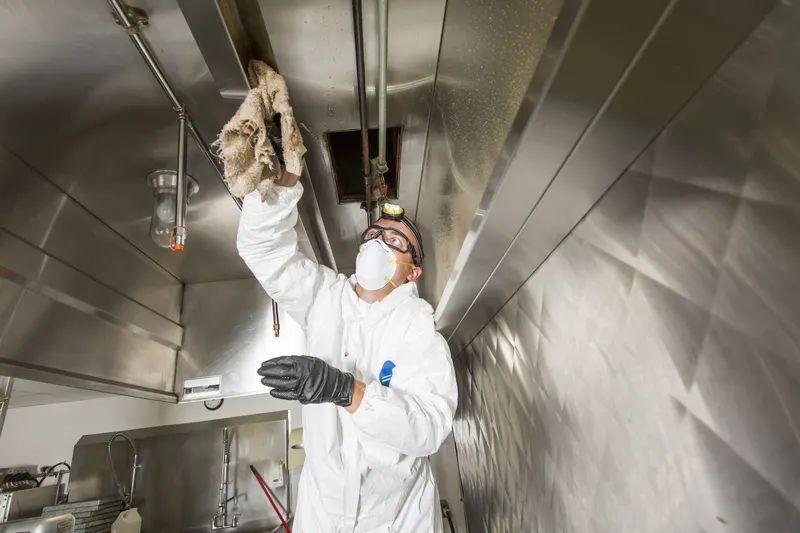
NFPA 96 on its own is a published standard, not a law. The Fire Code is the regulation that gives it force in Ontario. Because the Code points to the standard, a Kingston kitchen is held to the NFPA 96 maintenance rules through provincial law. You can read the regulation on the Ontario e-Laws page for O. Reg. 213/07.
What Kingston Fire and Rescue fire prevention looks for
Kingston Fire and Rescue runs the fire prevention programs that enforce the Ontario Fire Code in the City of Kingston.
When an inspection reaches your kitchen, the exhaust questions come down to evidence. Have the most recent cleaning certificate on hand, dated and signed, with each section named. Keep the before-and-after photographs with it. Make sure the filters are in place with no gaps in the slot. If the kitchen changed its menu or hours, check that the schedule still matches the table above.
Outside the city, each township has its own fire department, listed on the areas served page. Food premises inspections are a separate matter handled by Southeast Public Health.
Fire code compliant hood cleaning: what the certificate says and what it does not
Fire code compliant hood cleaning ends with a signed health and safety certificate that references the published NFPA 96 standard and names each section cleaned.
What it asserts. The certificate records the date of the visit and each part of the system that was cleaned, such as the hood, the filters, the duct or the fan. The photographs show the state of each surface before and after.
What it does not assert. The certificate is not an NFPA document, and NFPA does not endorse it. It is not a fire department approval. It says nothing about a section that was not cleaned on that visit, and it does not cover servicing of the fire suppression system. The full wording of what a visit covers is in the terms.
Certified hood cleaning company in Ontario: is there an NFPA 96 certification?
NFPA 96 certification for hood cleaning companies does not exist, because NFPA publishes the standard and does not certify the companies that work to it.
A company that calls itself "NFPA 96 certified" is claiming a credential nobody issues. Ask for things you can check instead. Ask for proof of WSIB coverage and liability insurance before work starts. Ask for before-and-after photographs of every surface. Ask for a signed certificate that names each section cleaned. Kingston Hood Cleaning provides all three on every visit, and the services page shows which part of the system each service covers.
Who is responsible for NFPA 96 compliance in Kingston, the tenant or the landlord?
The lease decides who books and pays for exhaust cleaning, while NFPA 96 and the Fire Code decide what the system needs.
Read the maintenance clause in your lease before the next inspection. In a single-tenant building, the restaurant often handles the hood while the owner keeps the roof. In a plaza, a shared riser or roof fan can sit with the landlord. Whoever books the work, send a copy of each certificate to the other party. Gaps between the two are where a duct goes years without cleaning. The kitchen exhaust cleaning page covers shared risers, and the exhaust fan page covers the roof.
NFPA 96 in Kingston: frequently asked questions
How often does a Kingston restaurant need its hood cleaned?
NFPA 96 sets the interval by cooking volume: monthly for solid fuel, quarterly for high volume, semi-annual for moderate volume and annual for low volume. A charbroiler or 24-hour line lands on quarterly.
Who enforces NFPA 96 in Kingston?
Kingston Fire and Rescue enforces the Ontario Fire Code in the city through its fire prevention programs. The Fire Code references NFPA 96, so the standard is enforced through that route.
What happens to the hood at a fire inspection?
A fire inspection that covers the kitchen looks at the exhaust system and its records. A dated, signed certificate naming each section cleaned, with photographs, answers the maintenance question on the spot.
Does the cleaning certificate satisfy my insurance company?
A signed certificate gives your insurer a dated record of what was cleaned and against which standard. Whether it meets a specific policy condition depends on the policy wording, so send a copy to your broker and ask.
My landlord owns the building. Who has to book the cleaning?
The lease answers that, not NFPA 96. If the lease is silent, agree in writing who books the hood, the duct and the fan, and share every certificate. You can ask for a quote in either name.